Listen to this article
Turing Machine Explained in the Simplest Way (With Easy Examples)
Introduction
Most students hear the term “Turing Machine” and immediately think it is something very complex.
But here is the truth.
A Turing Machine is actually one of the simplest concepts in computer science when explained the right way.
This guide will help you understand it clearly using simple language, real examples, and step-by-step thinking.
Why This Topic Feels Difficult
Students struggle with Turing Machines because:
- Definitions are too theoretical
- Diagrams look confusing
- No real-world connection is explained
- Too much focus on symbols instead of logic
Because of this, many people memorize without understanding.
What Is a Turing Machine (Simple Idea)
A Turing Machine is a theoretical machine that:
- Reads input
- Writes output
- Moves step by step
- Follows rules
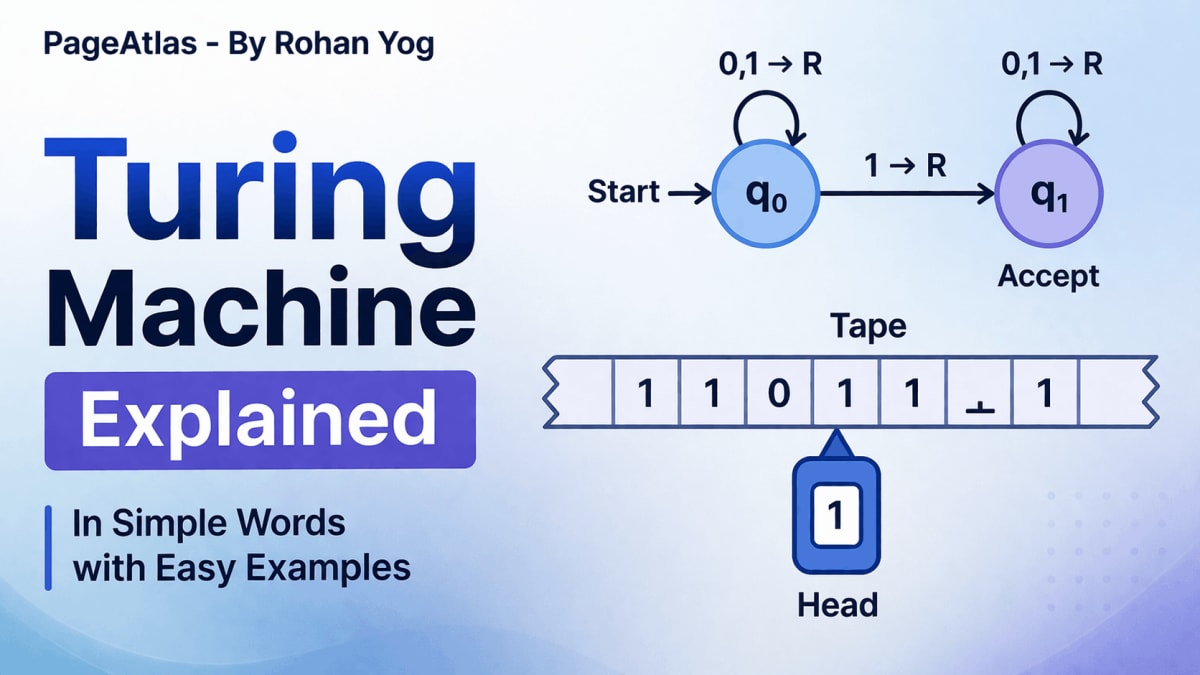
Think of it like a very basic computer that works on a tape.

The Simplest Way to Imagine It
Imagine:
- A long tape divided into boxes
- Each box contains a symbol
- A head that can read and write
- A set of rules that tells what to do next
This is all a Turing Machine is.
Main Components Explained Simply
Tape:
Stores data (like memory)
Head:
Reads and writes symbols
States:
Different conditions of the machine
Transition rules:
Instructions that control behavior
How It Works Step by Step
- Read the current symbol
- Check the current state
- Follow a rule
- Write a symbol (if needed)
- Move left or right
- Change state
This process continues until it stops.
Example That Makes It Clear
Let us say we want to check if a string contains only “1”.
Input:
1111
Step 1:
Read first symbol → 1
Step 2:
Move right
Step 3:
Repeat until end
If all symbols are “1”, accept.
If any other symbol appears, reject.
Another Simple Example
Task:
Replace all “a” with “b”
Input:
aaa
Output:
bbb
The machine:
- Reads “a”
- Writes “b”
- Moves right
- Repeats
Why Turing Machine Is Important
It helps us understand:
- What problems computers can solve
- Limits of computation
- How programs work internally
It is the foundation of modern computing.
Real-Life Analogy
Think of a Turing Machine like:
A person reading a checklist:
- Reads instruction
- Performs action
- Moves to next step
Everything is rule-based and systematic.
Step-by-Step Way to Learn It Easily
Start with simple tasks:
- Replace symbols
- Check patterns
Then move to:
- String validation
- Complex logic
Do not jump directly to advanced problems.
Example Prompts to Learn Faster Using AI
“Explain Turing machine in simple words with examples”
“Give a step-by-step example of Turing machine”
“Create a Turing machine for string validation”
“Explain Turing machine transitions simply”
Pro Tips for Exams
- Focus on understanding transitions
- Practice small examples
- Draw diagrams clearly
- Do not memorize blindly
Common Mistakes to Avoid
- Ignoring the tape concept
- Not understanding states
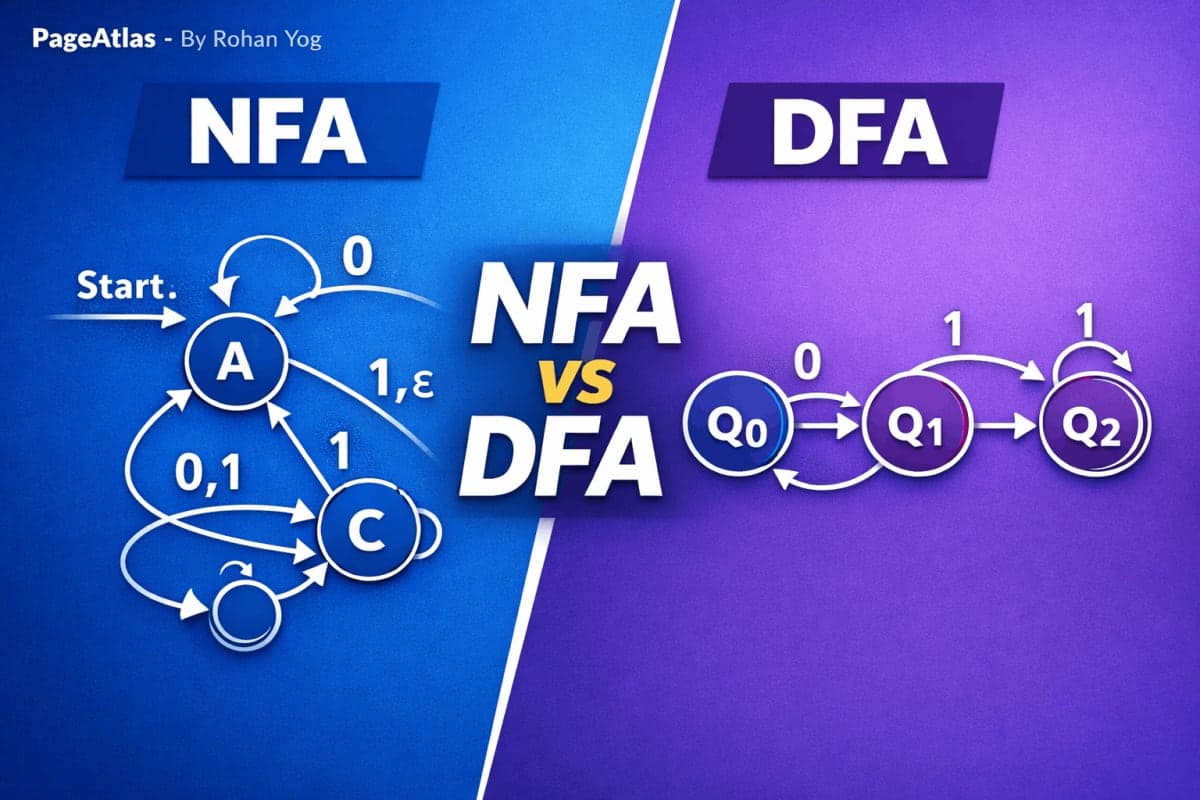
- Confusing DFA with Turing Machine
- Skipping practice
Key Difference from Automata
Finite automata:
- Limited memory
Turing Machine:
- Infinite tape (theoretically)
This makes Turing Machine more powerful.
Quick Revision Summary
- Tape = memory
- Head = reader/writer
- States = conditions
- Rules = instructions
Everything works step by step.
Conclusion
Turing Machine is not difficult if you understand it visually and logically.
It is simply a machine that follows rules on a tape.
Once you practice a few examples, the concept becomes clear and easy to remember.
Focus on understanding, not memorizing.
That is the key to mastering this topic.
FAQ
1. What is a Turing Machine?
A theoretical machine that processes symbols step by step.
2. Is it difficult to learn?
No, if explained with examples.
3. Why is it important?
It defines the limits of computation.
4. Does it exist physically?
No, it is a theoretical concept.
5. Is it used in exams?
Yes, it is a key topic in computer science.

Rohan Yog
Rohan Yog is a software developer and digital creator focused on building practical solutions and sharing knowledge about AI, blogging, and online income. Through PageAtlas, he helps beginners learn modern tools and turn their skills into real-world results.
View all articles by Rohan Yog→