
Listen to this article
Soft Computing Explained Simply (With Real-Life Examples That Make It Easy)
If you’ve ever wondered how machines make decisions like humans — even when things are not perfect — then you are already thinking about soft computing.
Most explanations make this topic sound complex. But the truth is, soft computing is actually very intuitive.
In this guide, you will understand soft computing so clearly that you can explain it to anyone.
What is Soft Computing?
Soft computing is a way of solving problems using approximate solutions instead of exact answers.
Unlike traditional computing (hard computing), which needs precise inputs and outputs, soft computing works with uncertainty, vagueness, and incomplete data.
In simple words:
Soft computing = smart decision-making with imperfect information.

Why Do We Need Soft Computing?
Real-world problems are rarely perfect.
For example:
- Weather prediction is uncertain
- Human behavior is unpredictable
- Medical diagnosis is not always exact
Hard computing fails in such cases because it needs exact data.
Soft computing handles:
- Uncertainty
- Partial truth
- Approximate reasoning
Real-Life Example (Very Easy to Understand)
Imagine you are deciding whether the weather is “hot”.
Hard computing:
- Temperature > 30°C → Hot
- Temperature ≤ 30°C → Not hot
Soft computing:
- 28°C → somewhat hot
- 32°C → hot
- 40°C → very hot
This “degree of truth” is what soft computing handles.
Key Components of Soft Computing
Soft computing is not a single technique. It includes multiple approaches.
Fuzzy Logic
Fuzzy logic deals with partial truth.
Instead of true or false:
- It works with values between 0 and 1
Example:
Fan speed control:
- Slightly hot → slow speed
- Very hot → high speed
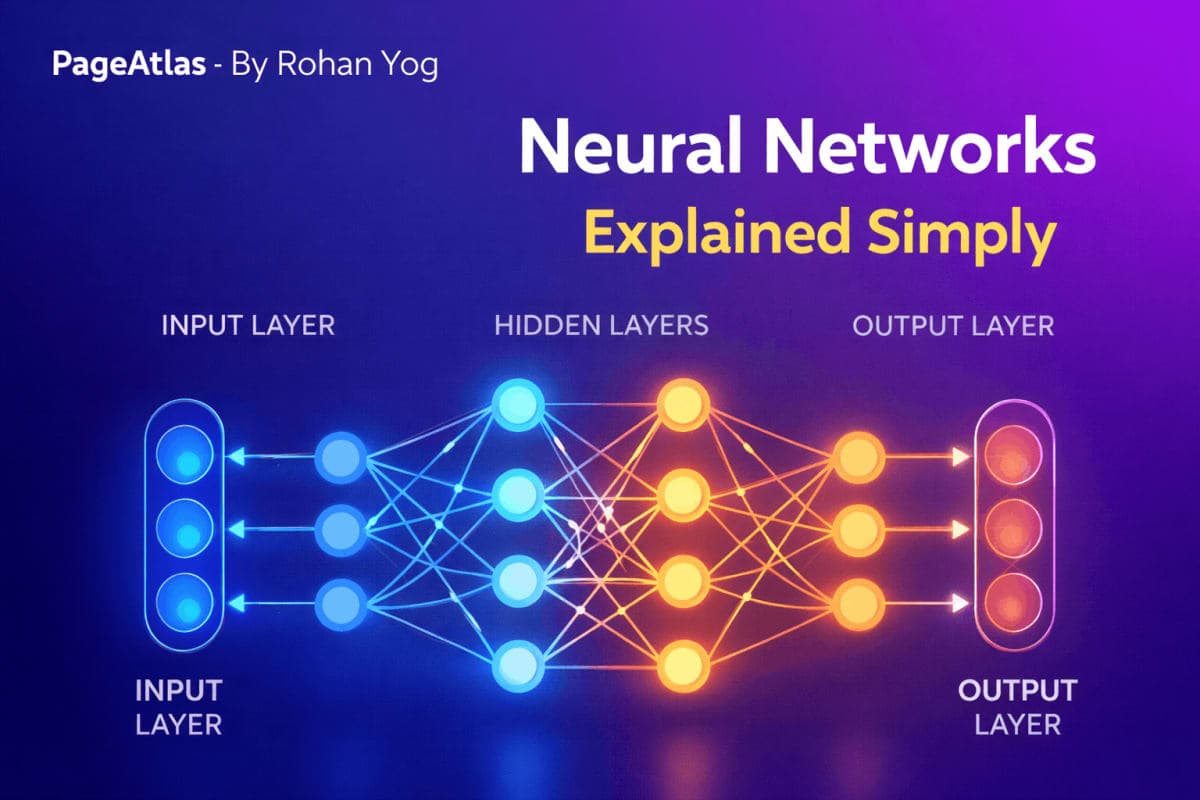
Neural Networks
Inspired by the human brain.
Used for:
- Image recognition
- Speech recognition
- Prediction
Example:
Face unlock in smartphones.
Genetic Algorithms
Based on natural evolution.
Used for:
- Optimization problems
- Finding best solutions
Example:
Finding shortest route in maps.
Probabilistic Reasoning
Deals with uncertainty using probability.
Example:
Spam detection in emails.
Soft Computing vs Hard Computing
Hard computing:
- Exact solutions
- No tolerance for errors
- Strict logic
Soft computing:
- Approximate solutions
- Handles uncertainty
- Flexible logic
How Soft Computing Works (Step-by-Step Thinking)
Let’s simplify the process.
Step 1: Accept Imperfection
Input data may not be exact.
Step 2: Apply Intelligent Techniques
Use:
- Fuzzy logic
- Neural networks
- Genetic algorithms
Step 3: Process Data
System evaluates possibilities instead of exact answers.
Step 4: Generate Best Possible Output
Output is:
- Not always perfect
- But close to real-world behavior
Where is Soft Computing Used?
Soft computing is everywhere:
- AI systems
- Self-driving cars
- Recommendation systems
- Medical diagnosis
- Robotics
Real-World Applications
1. Washing Machines
Automatically adjust water and time using fuzzy logic.
2. Google Search
Uses AI and soft computing to show relevant results.
3. Netflix Recommendations
Predicts what you might like.
4. Stock Market Prediction
Handles uncertain and changing data.
Why Soft Computing is Important for You
If you are:
- A developer
- A student
- Preparing for interviews
Then this is a must-know concept.
It is the foundation of:
- Artificial Intelligence
- Machine Learning
Pro Tips (To Understand Faster)
1. Focus on Concept, Not Theory
Understand “why” instead of memorizing.
2. Think Real-World First
Always relate to daily life examples.
3. Learn Basic Techniques
Start with:
- Fuzzy logic
- Neural networks
4. Practice Use Cases
Think:
“How would I use this in real life?”
Common Mistakes
Mistake 1: Thinking It’s Only AI
Soft computing is broader than AI.
Mistake 2: Ignoring Real-Life Examples
Without examples, it feels abstract.
Mistake 3: Confusing with Hard Computing
Both are very different.
Mistake 4: Overcomplicating Concepts
Keep it simple.
Why Soft Computing Feels Difficult (But Isn’t)
It feels difficult because:
- It deals with uncertainty
- It is not binary
But once you understand:
“approximate reasoning”
Everything becomes clear.
Advanced Insight (To Stand Out)
To go deeper:
- Combine techniques (neuro-fuzzy systems)
- Learn machine learning basics
- Explore AI models
Final Thoughts
Soft computing is not about perfect answers.
It is about smart decisions in an imperfect world.
And that is exactly how humans think.
Call to Action
Now your next step:
- Pick one technique (like fuzzy logic)
- Learn it deeply
- Apply it in small projects
That’s how you truly master soft computing.
FAQ
Q1: What is soft computing in simple words?
It is a method of solving problems using approximate solutions.
Q2: What are examples of soft computing?
Fuzzy logic, neural networks, and genetic algorithms.
Q3: Where is soft computing used?
AI systems, robotics, recommendation systems.
Q4: Is soft computing important for interviews?
Yes, especially for AI and computer science roles.
Q5: What is difference between hard and soft computing?
Hard computing uses exact logic, soft computing handles uncertainty.

Rohan Yog
Rohan Yog is a software developer and digital creator focused on building practical solutions and sharing knowledge about AI, blogging, and online income. Through PageAtlas, he helps beginners learn modern tools and turn their skills into real-world results.
View all articles by Rohan Yog→